
Edwardsville Previous-Resident Sources
No single roll identifies every person who occupied an Edwardsville home. Start with the era in question. Current assessment data supplies a parcel number and owner name, while the Madison County Recorder links that parcel to transfers. Historical directories, census schedules, newspapers, vital records, and probate files add the household layer. The table separates the strongest sources by time and purpose.
| Source | Years It Covers | Where Held | What It Shows |
|---|---|---|---|
| Recorder land books and Tapestry | 1812 onward; online route after 1984 | Madison County Recorder | Grantors, grantees, instruments, legal descriptions |
| Selected city-directory leads | 1925-1959, not a complete run | National collection and local research rooms | Dated names and street addresses |
| Federal census | Through 1950 under the 72-year rule | Library databases and federal archives | Household members and relationships |
| Probate case-file index | 1813-1903 | IRAD finding aid | Estate names, heirs, administrators, and land leads |
| Permits and plans | Coverage varies by record | Edwardsville Planning, Public Works, and City Clerk | Address, parcel, applicant, project, and decision dates |
For a recent transfer, begin with DEVNET and the Recorder land-record routes. For a mid-century household, try a dated directory beside the public census. For an early Edwardsville family, the Recorder, IRAD, atlas, newspaper, cemetery, and probate trails work best as a set. Never flatten those dated observations into one claim of continuous residence.
Edwardsville Deeds Across Two Eras
Madison County land recording begins in 1812. The Recorder's official copy guidance describes Tapestry as the online route for records after 1984, but that statement is not a promise that every image or instrument has the same cutoff. Earlier deeds may require staff help, a copy request, microfilm, or work in the Recorder's vault. This split matters when tracing previous residents because an empty web result can be an access gap, not proof that a transfer never occurred.
Search the current parcel first, then keep the legal description with every result. Street numbers and lot lines can change, while the lot, block, subdivision, book/page, or document number gives a stronger bridge between eras. The Recorder accepts requests by document reference where possible. Its copy-options sheet lists mailed copies at $1 per page and emailed copies at $2 per page, with payment before email and a stated five-to-seven-business-day processing range.
Trace Edwardsville Owners Backward
A chain of title is the linked series of recorded transfers for one parcel. It is an ownership trail, not a list of all occupants. In Edwardsville, use the assessment roll only to establish a present owner, parcel number, and legal description. Then move to the Recorder and walk each transfer backward. Keep an image or copy reference for every link rather than trusting a name-only search.
- Find the site address in DEVNET. Record the PIN, owner, sale data, and legal description, but distinguish the site address from the tax mailing address.
- Locate the present owner's acquisition deed through the Recorder. Capture the grantor, grantee, recording date, document number, and book/page if shown.
- Search the seller as a grantee in an earlier period. Match the parcel through its legal description, not merely a repeated surname.
- Repeat the grantee-to-grantor handoff. Note transfers caused by estates, trusts, boundary changes, or corrective instruments.
- When the online trail reaches its limit, ask Recorder staff for the vault, book, microfilm, or copy-request route tied to the last known reference.
- Grantor / grantee
- The grantor transfers an interest; the grantee receives it.
- Chain of title
- The sequence of recorded transfers linked to the same land.
- Legal description
- The lot, block, subdivision, or survey wording that identifies land even when a street address changes.
Edwardsville Addresses Before Street Numbers
Old records may describe land by a landmark, owner, road, lot, or legal description rather than today's house number. The Illinois Digital Archives holds Madison County atlases from 1873, 1892, and 1906. Those maps can place a surname, road, or parcel in historic context, though an atlas label may name an owner rather than an occupant. Sanborn fire maps linked by the Edwardsville Public Library add building footprints, use labels, block geography, and street numbers.
Historic Edwardsville gives several fixed points for comparison: the early public square on the 1200 block of North Main, the Pogue Store wall at 1201 N Main, the 1820 brick house at 409 S Buchanan, and the 1836 Dr. John Weir House at 715 N Main. Use such landmarks only as dated map anchors. A nearby name does not prove residence. Preserve directional prefixes, initials, former surnames, and full lot or subdivision wording when previous residents seem to disappear between sources.
Edwardsville House-History Collections
The Edwardsville Public Library genealogy collection links census material, Sanborn maps, early newspapers, cemetery files, and local-history tools. The Madison County Genealogical Society collection is for library use and is described as holding hundreds of books, while another established collection description reports more than 2,500 volumes and an indexed obituary file. Ask staff which catalog or finding aid controls the item you need.
The Madison County Historical Society at 801 N Main also offers house-history and archive leads. Its online catalog was blocked during research, so item-level holdings need a live check or staff request. These local collections can bridge a missing directory year with photographs, clippings, an obituary pointer, or a house file.
The county genealogy page shows the request route used for older family records.

The captured page helps distinguish an uncertified genealogy request from a certified vital record.
Edwardsville Probate and Newspaper Trails
The Madison County Probate Case Files Index covers 1813 through 1903. It can point to petitions, heirs, administrators, inventories, guardians, land references, and distributions. The index is only a finding aid. Request the underlying file through IRAD before treating an indexed surname as part of the house trail. For later cases, use the Madison County Circuit Clerk's current probate route and request form.
Newspapers can close a gap between a deed and a directory. Edwardsville Public Library resources describe Edwardsville and Madison Intelligencer coverage from 1862 onward, plus an archive covering 1862-1977. The Edwardsville Spectator offers a rare 1819-1826 window, although its link failed during research. Obituaries may supply relatives and dates, but they can repeat family errors. Verify spellings through the newspaper image, cemetery inscription, vital record, or probate file.
Vital Proof for Edwardsville Residents
The Madison County Clerk reports genealogy access for births older than 75 years, marriages older than 50 years, and deaths older than 20 years. Those genealogy copies are uncertified and marked for genealogical purposes. Certified records follow separate eligibility and fee rules. County holdings reach marriages from 1813, deaths from 1878, and births from the late 1800s. State archives rules use different thresholds, so always follow the custodian that holds the exact record.
The official county pages show separate record routes. The death-certificate page explains county access.

A certificate may confirm a death, but it does not by itself prove every year of residence at the address.
The marriage-record route is distinct from death access.
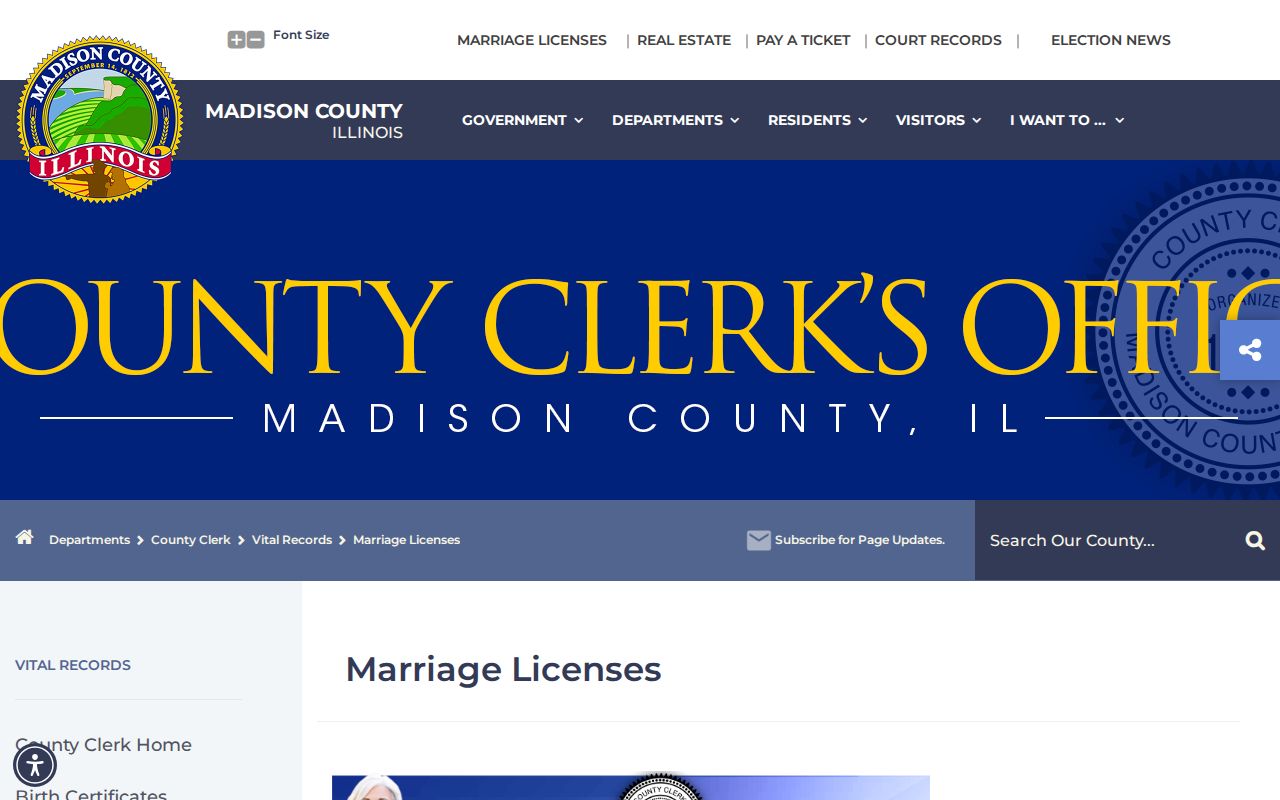
Marriage evidence can connect surnames, but pair it with a dated address source.
For state-period genealogy, consult the Illinois Department of Public Health genealogy guidance.
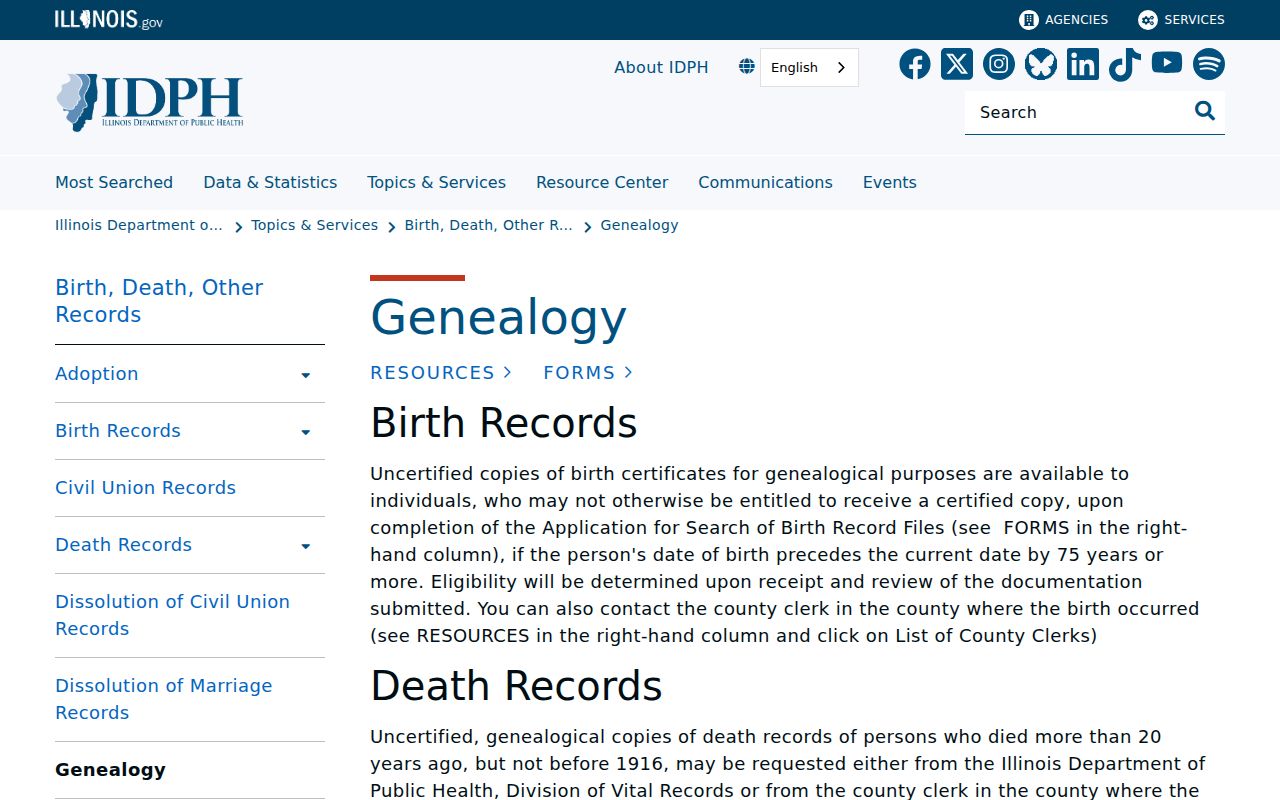
IDPH death records do not predate 1916, so earlier deaths return to the County Clerk or IRAD.
Match Edwardsville Households by Year
Owners are only half the story. A directory line or census schedule may reveal a household that never held title. Established Edwardsville city-directory leads include selected years from 1925 through 1959, but no official local catalog proves a complete run, first year, publisher, or final issue. The Edwardsville city directory material explains those collections in depth. Treat each volume as one dated observation.
Pair sources in a simple flow: directory address and printed name, then the nearest public census, then a newspaper or yearbook, and finally a vital or probate record if the timeline ends. The latest fully public federal census is 1950 under the 72-year release rule. Search variants such as North and N, Saint and St, initials, married surnames, and spelling errors. A matching spouse, parent, school year, parcel, or probate tie is safer than a surname alone.
- Transcribe the exact directory year, address, name, page, and image citation.
- Check the closest public census for the full household and its enumeration district.
- Compare newspapers, yearbooks, cemetery files, or probate sources for dated links.
- Record gaps as gaps. Do not stretch one source across years it does not cover.
The Madison County Genealogical Society describes local collections and research support.
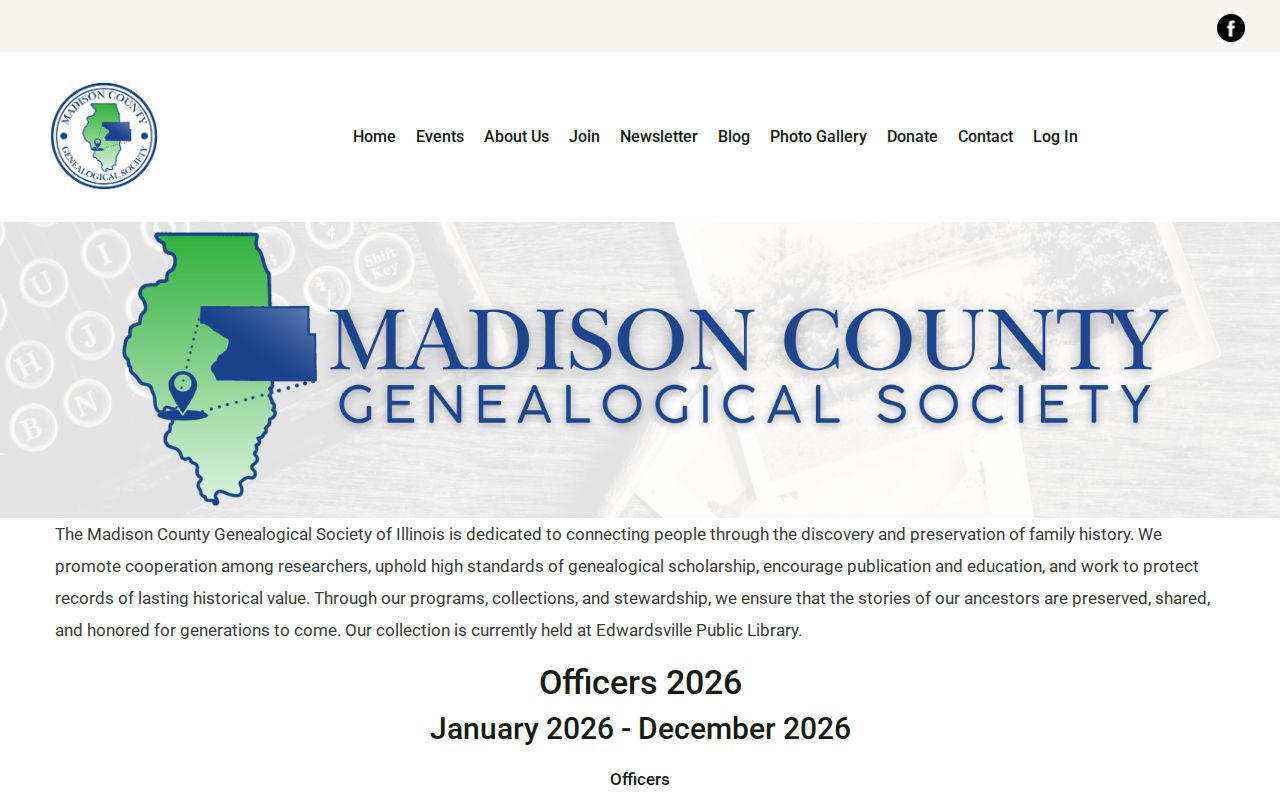
Its local focus makes it a useful fallback when web indexes stop short.
Lawful use. Research previous residents for house history, family history, or a lawful estate question. Never use a dated address trail to track or harass a living person.